

Why does a seared steak smell so different from a boiled one? Why is the crust of fresh bread the best part, and why does coffee gain its rich aroma only after roasting? The answer to all three is the same piece of chemistry, named after the French scientist who first described it more than a century ago: the Maillard reaction.
What the Maillard reaction is
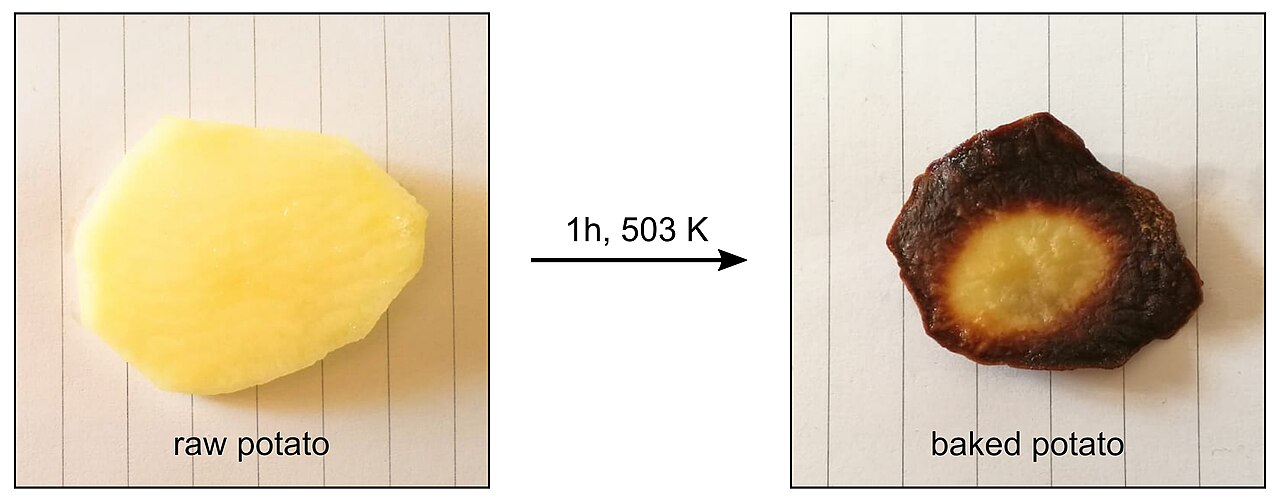
The Maillard reaction is a chemical reaction between amino acids — the building blocks of protein — and certain sugars, set off by heat. As food cooks, these two ingredients combine and rearrange into a cascade of new molecules. Some of those molecules are brown pigments, which is why the surface of cooked food darkens. Many others are aroma compounds, which is why browned food smells and tastes so much deeper than the same food raw or boiled.
In short: amino acids plus sugars plus heat equals colour and flavour. It is one of the most important reactions in all of cooking, and it happens in almost every kitchen, every day.
How it actually works
Food contains proteins and sugars side by side. When the surface gets hot enough — generally well above the temperature of boiling water — the amino acids and sugars begin to react. This is not a single tidy step but a sprawling network of reactions that builds on itself.
The early stages produce colourless compounds. As cooking continues, these combine and transform further, generating:
- Brown pigments called melanoidins, which give browned food its colour.
- Hundreds of aroma compounds, including ones described as roasted, nutty, meaty, malty and toasty.
Because so many different molecules form, browned food has a complexity that is impossible to get any other way. A single Maillard-browned crust can contain flavour compounds you would otherwise find spread across many separate foods.
Maillard versus caramelisation
These two are often confused because both make food brown and both need heat, but they are not the same.
- The Maillard reaction needs both amino acids and sugars. It produces savoury, roasted, meaty notes.
- Caramelisation is the browning of sugar alone at high temperature. It produces sweeter, more candy-like flavours.
Many familiar foods involve both at once. The crust of bread, for example, browns through a mix of Maillard reactions and caramelisation happening together. But understanding the difference explains why a seared steak tastes savoury while melted sugar tastes sweet.
Why dryness and heat matter
Here is the most useful practical lesson. Water is the enemy of browning.
As long as the surface of food is wet, its temperature stays near the boiling point of water — too cool for the Maillard reaction to run quickly. Only once the surface dries out can it climb to the higher temperatures where browning takes off.
If your food is steaming in the pan instead of sizzling, it is being cooked by water, not browned by heat.
That single fact explains a lot of kitchen advice:
- Pat meat dry before searing so the surface can heat up fast.
- Do not crowd the pan, because packed-in food releases steam that keeps everything wet.
- Use a hot pan or oven, so the surface reaches browning temperature quickly.
- A pinch of sugar or a brush of milk on baked goods can encourage browning by adding reactive ingredients.
Where you taste it every day
Once you know what to look for, the Maillard reaction is everywhere:
- Seared and roasted meat — the brown, savoury crust on a steak, chop or roast chicken skin.
- Toast and bread crust — pale bread becomes fragrant and golden as it toasts.
- Roasted coffee — green coffee beans are nearly flavourless until roasting browns them.
- Fried and caramelised onions — slow cooking turns them deep brown and sweet-savoury.
- Baked goods — cookies, pastries and pretzels owe much of their colour and flavour to it.
- Roasted nuts, malted grains and grilled vegetables — all gain depth the same way.
In each case, the same underlying chemistry is producing colour and aroma from the food's own proteins and sugars.
The bottom line
The Maillard reaction is the quiet engine behind some of the best flavours we cook. Whenever amino acids and sugars meet enough heat on a dry surface, they create the browned colour and rich aroma we associate with food that tastes "cooked" rather than merely heated. Understanding it turns a vague instinct — get a good sear, toast it well, dry it first — into something you can do on purpose.
Frequently asked questions
What is the Maillard reaction?
It is a heat-driven chemical reaction between amino acids (the building blocks of protein) and certain sugars. It produces the brown colour and the deep, savoury aromas of cooked foods like seared steak, toast and roasted coffee.
Is the Maillard reaction the same as caramelisation?
No. Caramelisation is the browning of sugars on their own at high heat. The Maillard reaction needs both amino acids and sugars. Many browned foods involve a mix of the two, but they are distinct processes.
Why does food brown faster when it is dry?
Water keeps the surface temperature near boiling point, which is too low for fast browning. Patting food dry and using higher heat lets the surface get hot enough for the Maillard reaction to speed up.
Is Maillard browning bad for you?
Normal cooked, browned food is fine to eat. Very high heat and heavy charring can form some less desirable compounds, so the general advice is to brown food well without burning it black.






Join in — free. Comments on Daily Junction are for members, so real names stay rare and bots stay out.
One field. We email you a 6-digit code — no password needed. Your comment is kept while you do it.
Under 13? You’ll need a parent’s OK first — it takes them one click.