How Artificial Intelligence Is Changing Scientific Research
AlphaFold's creators won the 2024 Nobel Prize in Chemistry, and the AlphaFold database now covers over 200 million predicted protein structures. Here is how AI is genuinely accelerating science, and where the hype outruns the evidence.
TL;DRDeepMind's Demis Hassabis and John Jumper shared the 2024 Nobel Prize in Chemistry…The AlphaFold Protein Structure Database now holds over 200 million predicted structures…AI is compressing tasks that once took years — such as determining a protein's 3D…
Context: the year AI's role in science got a Nobel Prize
For years, claims about AI transforming science ran ahead of the evidence. That changed decisively in October 2024, when the Nobel Prize in Chemistry was awarded partly for AlphaFold — an AI system that solved a fundamental biological problem researchers had wrestled with for half a century. The Nobel committee's recognition marked a shift from AI-in-science as promise to AI-in-science as demonstrated, prize-winning fact, and it is worth understanding both what that breakthrough actually did and where the broader hype still outruns reality.
The data: what AlphaFold changed, in numbers
The problem AlphaFold solved is called protein folding. Proteins are chains of amino acids that fold into intricate three-dimensional shapes, and that shape determines what the protein does — which means understanding structure is the gateway to understanding biology and designing drugs. Experimentally determining a single protein's structure, using techniques like X-ray crystallography, could take months or years. AlphaFold, developed by Google DeepMind, predicts the structure from the amino acid sequence in hours, with accuracy rivalling experimental methods for a large share of proteins.
The scale of what followed is the headline. The AlphaFold Protein Structure Database, run jointly with the European Bioinformatics Institute, now holds over 200 million predicted structures — covering nearly every protein in major sequence databases. Before AlphaFold, science had experimentally determined structures for only a small fraction of known proteins. In October 2024, DeepMind's Demis Hassabis and John Jumper shared the Nobel Prize in Chemistry for the achievement, alongside David Baker, recognised for the related field of computational protein design.
Before AlphaFold
After AlphaFold
Months-to-years per protein structure
Hours per prediction
Small fraction of proteins solved
Over 200 million structures predicted
Structural biology a specialist bottleneck
Structures freely available to any researcher
What's changing: from prediction to discovery, unevenly
AlphaFold is the flagship, but AI is now embedded across the research pipeline. In drug discovery, models screen enormous chemical libraries, predict how candidate molecules will bind to disease targets, and design new compounds far faster than traditional trial-and-error. Several AI-designed or AI-optimised drug candidates have entered clinical trials. In climate science, machine-learning weather and climate models now rival traditional physics-based simulations for certain forecasting tasks at a fraction of the computing cost. In materials science, AI has proposed vast numbers of candidate stable materials for experimental testing.
But the acceleration is uneven, and the caveats matter. No fully AI-discovered drug has yet completed the entire approval process — the hardest, most expensive stage, proving safety and efficacy in humans, remains stubbornly resistant to shortcuts. And the research community has grown increasingly vocal about the risks that come with the gains.
"AlphaFold is a genuine scientific revolution. But a lot of what gets marketed as 'AI is doing science' is really AI is doing a narrow, well-defined prediction task extremely well — which is enormously valuable, but not the same as AI understanding or explaining the science." — a distinction widely echoed in the scientific literature, including commentary in Nature on where AI genuinely advances research.
What it means for you (and for science's reliability)
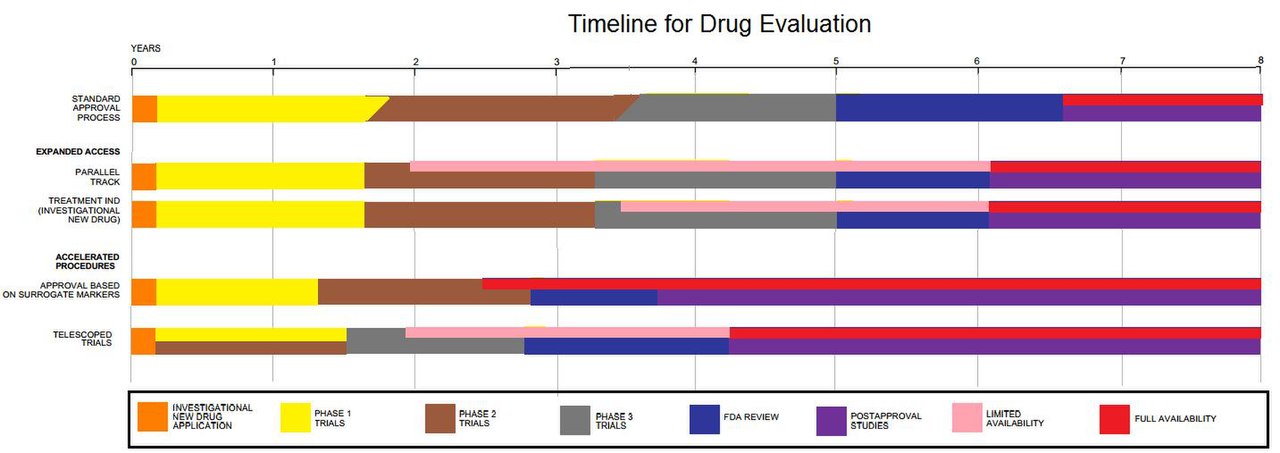
For anyone who relies on scientific progress — which is everyone — the practical upside is faster movement on hard problems: drug candidates identified sooner, disease mechanisms mapped faster, materials for clean energy proposed at scale. But there are risks worth understanding. Reproducibility is a growing concern: AI results can be hard for other researchers to replicate when training data or model details are not fully shared. "AI slop" — low-quality or fabricated AI-generated content, including text and images, appearing in published papers — is polluting parts of the research literature. And the explanation gap is a genuine tension: many AI models predict accurately without revealing why, which can advance capability without advancing the understanding that is science's actual purpose. These are being addressed through new reproducibility standards and disclosure requirements, but unevenly. For the human-trials side of the story, our explainer on how clinical trials work covers the stage AI has not yet been able to shortcut.
It is also worth being clear-eyed about what AI does not change. Science's core method — forming a hypothesis, testing it against reality, and requiring that others can reproduce the result — is not something AI replaces. AI can propose candidate structures, molecules or materials at a scale no human team could match, but each still has to be validated experimentally in the physical world, and that validation remains slow, expensive and essential. The risk is that the sheer speed and volume of AI-generated predictions outpaces the capacity to verify them, flooding the literature with plausible-looking results that have not been experimentally confirmed. The most careful researchers treat AI as a powerful hypothesis-generator that expands what is worth testing, not as a source of settled answers — a distinction that matters enormously for keeping the acceleration trustworthy rather than merely fast.
What to watch next
Watch whether an AI-discovered drug completes the full clinical approval process — a milestone that would move the drug-discovery story from "faster candidates" to genuinely validated end-to-end results, and which several companies are racing toward. Watch how the research community responds to reproducibility and AI-slop concerns, since science's credibility depends on results that others can verify. And watch the next generation of AlphaFold-style breakthroughs in adjacent fields — protein design, materials discovery, and mathematics, where AI systems have begun contributing to genuine research problems. For a related frontier where AI and physics intersect, see our coverage of progress in nuclear fusion, another field where computational modelling is accelerating experimental work.
Frequently asked questions
What did AlphaFold actually achieve to win a Nobel Prize?
AlphaFold, developed by Google DeepMind, solved a decades-old problem in biology: predicting the three-dimensional shape a protein folds into from its amino acid sequence. A protein's shape determines its function, and experimentally determining it once took months or years per protein. AlphaFold predicts structures in hours with accuracy rivalling experimental methods for many proteins. Demis Hassabis and John Jumper of DeepMind shared the 2024 Nobel Prize in Chemistry for the work, alongside David Baker for related protein-design research.
How big is the AlphaFold database and why does that matter?
The AlphaFold Protein Structure Database, run jointly with the European Bioinformatics Institute, holds over 200 million predicted protein structures — covering nearly every protein catalogued in major sequence databases. Before AlphaFold, science had experimentally determined structures for only a small fraction of known proteins. Making 200 million structures freely available has accelerated research across drug discovery, enzyme design, disease understanding and basic biology, because researchers no longer need to spend years determining a structure before they can study it.
Is AI actually discovering new drugs, or is that just hype?
It is genuinely doing useful work, but with important caveats. AI is being used to screen enormous chemical libraries, predict how molecules will bind to disease targets, and design candidate compounds far faster than traditional methods. Several AI-designed or AI-optimised drug candidates have entered clinical trials. However, as of publication, no fully AI-discovered drug has completed the entire approval process, and the hardest, most expensive part of drug development — proving safety and efficacy in humans — is not something AI has yet shortcut. The acceleration is real at the discovery stage; the clinical bottleneck remains.
What are the main risks of AI in scientific research?
Three recur in the scientific literature. First, reproducibility: AI models can produce results that other researchers struggle to replicate, especially where training data or model details are not fully shared. Second, 'AI slop' — a rising volume of low-quality or fabricated content entering the research ecosystem, including AI-generated text and images in published papers. Third, the explanation gap: many AI models predict outcomes accurately without revealing the underlying mechanism, which can advance capability without advancing understanding — a genuine tension for science, whose goal is explanation, not just prediction.









Join in — free. Comments on Daily Junction are for members, so real names stay rare and bots stay out.
One field. We email you a 6-digit code — no password needed. Your comment is kept while you do it.
Under 13? You’ll need a parent’s OK first — it takes them one click.