
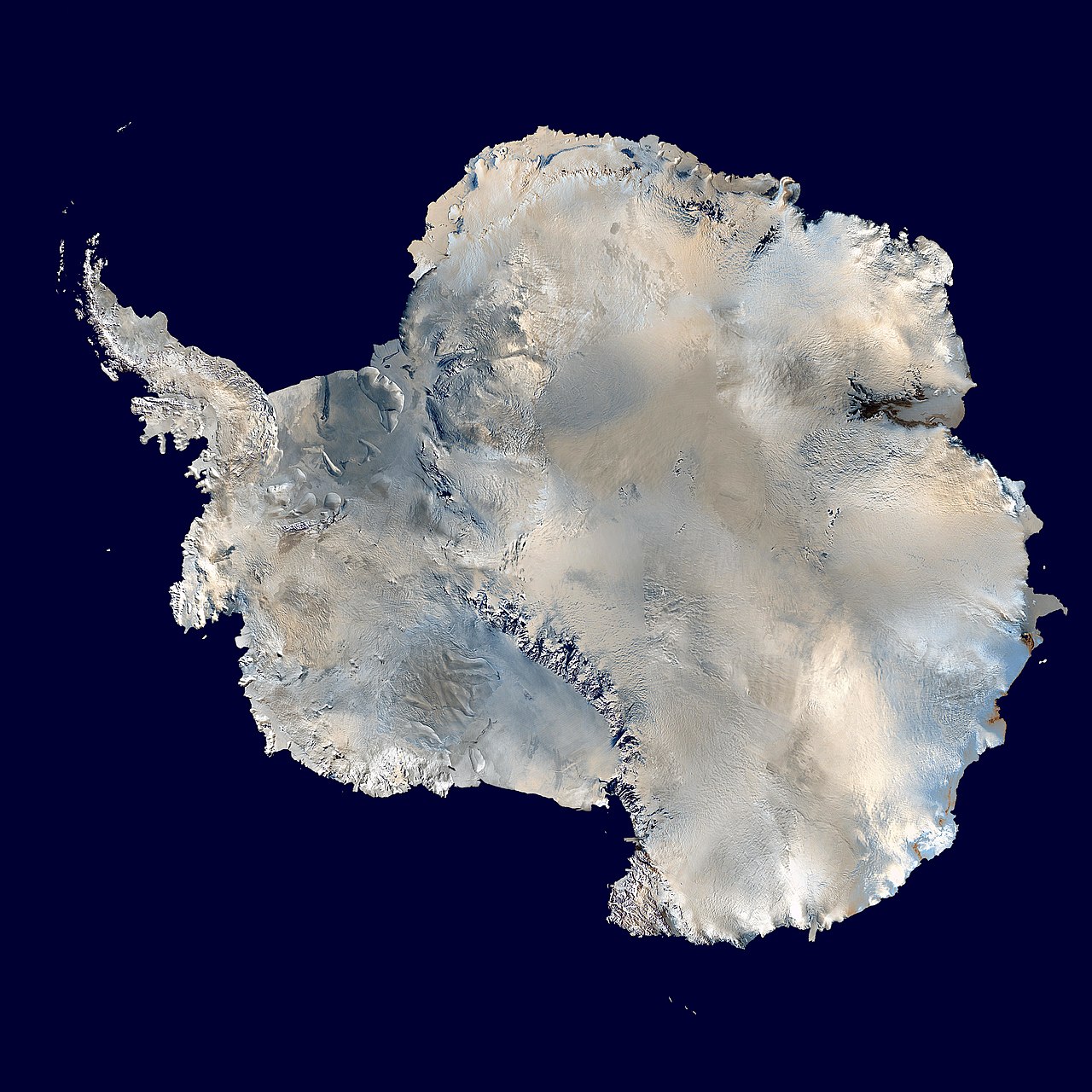
Look at a political map of Antarctica and you see something found nowhere else on Earth: seven wedge-shaped claims radiating from the South Pole, three of them, belonging to Britain, Argentina and Chile, overlapping on the Antarctic Peninsula, and one sector, Marie Byrd Land, claimed by nobody at all. Britain's claim is the oldest, dating to 1908, and survives today as the British Antarctic Territory, administered from the Foreign, Commonwealth and Development Office. Australia claims the largest slice, some 42 per cent of the continent. None of these claims is recognised by the United States, Russia, China or most of the rest of the world.
The Antarctic Treaty, signed in Washington in December 1959 by twelve states and in force since 1961, resolved this stand-off by refusing to resolve it. Article IV is the load-bearing clause: existing claims are neither recognised nor renounced, no new or enlarged claims may be asserted while the treaty operates, and no activity carried out on the ice creates a basis for sovereignty. Every flag planted, base built and stamp issued since 1961 counts for precisely nothing in law. The rest of the text demilitarises the continent, bans nuclear explosions and radioactive waste, guarantees freedom of scientific research, and gives every party the right to inspect anyone else's stations unannounced, a Cold War verification mechanism that predates most arms-control agreements.
Governance runs through the annual Antarctic Treaty Consultative Meeting, serviced by a small secretariat in Buenos Aires. Of the 50-plus states that have acceded, only about 29 consultative parties hold decision-making power, a status earned by demonstrating substantial scientific activity, which in practice means building and running a research station. Decisions require consensus, so every consultative party holds a veto. Two later instruments carry much of the weight: the 1982 Convention on the Conservation of Antarctic Marine Living Resources, run from Hobart, which regulates the krill and toothfish fisheries, and the 1991 Madrid Protocol, which designated Antarctica a natural reserve and banned all mineral resource activity apart from scientific research.
The pressure points
The mining ban is often described as expiring in 2048. It does not. What happens in 2048 is that any consultative party may call a review conference, and amending the ban would require ratification by three-quarters of the consultative parties together with a binding legal regime governing any extraction. That is a high bar, but the date now functions as a horizon states quietly position themselves against. Russian survey vessels operated by the state geological agency have conducted repeated seismic work in the Weddell Sea, within the British claim, and figures suggesting around 511 billion barrels of oil equivalent in the region were put before the Commons Environment Audit Committee in 2024. Moscow calls it science; Article VII inspections cannot easily prove otherwise, and the treaty contains no enforcement machinery beyond peer pressure.
Station-building tells a similar story. China opened Qinling, its fifth Antarctic station, on the Ross Sea in 2024, and states from India to Turkey and Iran have announced polar ambitions. A research base is the entry ticket to consultative status and a physical presence should the sovereignty question ever reopen, which is why bases cluster in strategically interesting places rather than purely scientific ones. Tourism adds a different strain: the industry body IAATO recorded more than 122,000 visitors in the 2023-24 season, most sailing from Ushuaia, under a self-regulation regime the consultative meeting has debated tightening for two decades without agreeing binding limits.
Why the freeze still holds
Consensus cuts both ways. The same veto that let the parties create the 1.55 million square kilometre Ross Sea marine protected area in 2016 has let China and Russia block proposed protected areas in East Antarctica and the Weddell Sea every year since. For Britain, which runs the Rothera and Halley stations through the British Antarctic Survey and operates the polar ship RRS Sir David Attenborough, the treaty is a bargain worth defending: it parks the overlapping Argentine and Chilean claims without conceding anything, at the cost of accepting that the British Antarctic Territory is a legal fiction almost nobody else acknowledges. The freeze endures because every alternative is worse for someone powerful. Whether that logic survives a world that has priced the seabed is the question the parties have agreed, for now, not to ask out loud.






Join in — free. Comments on Daily Junction are for members, so real names stay rare and bots stay out.
One field. We email you a 6-digit code — no password needed. Your comment is kept while you do it.
Under 13? You’ll need a parent’s OK first — it takes them one click.